

**Please note this program is delivered in both English and French.**
**For the French language version please see our HERE**

FRITZ-CILT
Certification in Humanitarian Logistics
(CHL)
Program Overview
Professional Training for Humanitarian Supply Chain & Logistics Specialists
The Certification in Humanitarian Logistics (CHL)—developed by FRITZ and the Chartered Institute of Logistics and Transport (CILT)—is a globally recognized qualification designed to strengthen the skills of logisticians working in humanitarian operations.
Launched in 2006 and enhanced with e-learning in 2021, this program builds foundational expertise in humanitarian supply chain management, enabling more effective and efficient emergency response.
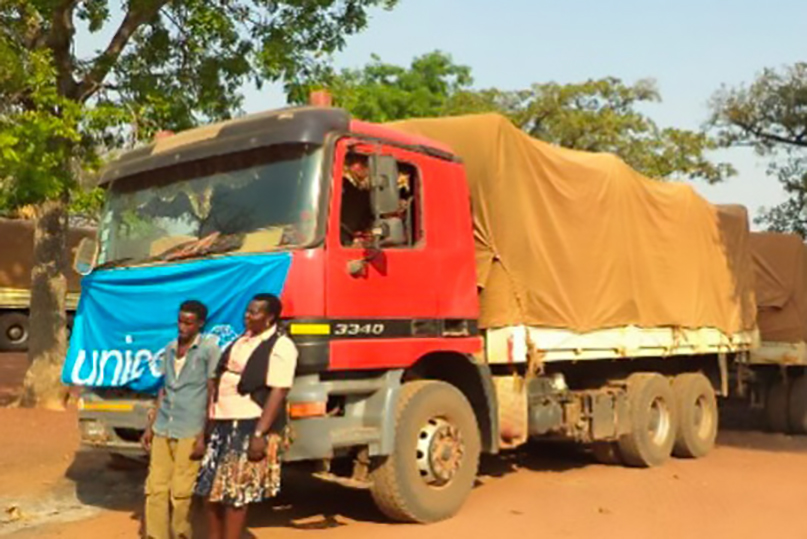
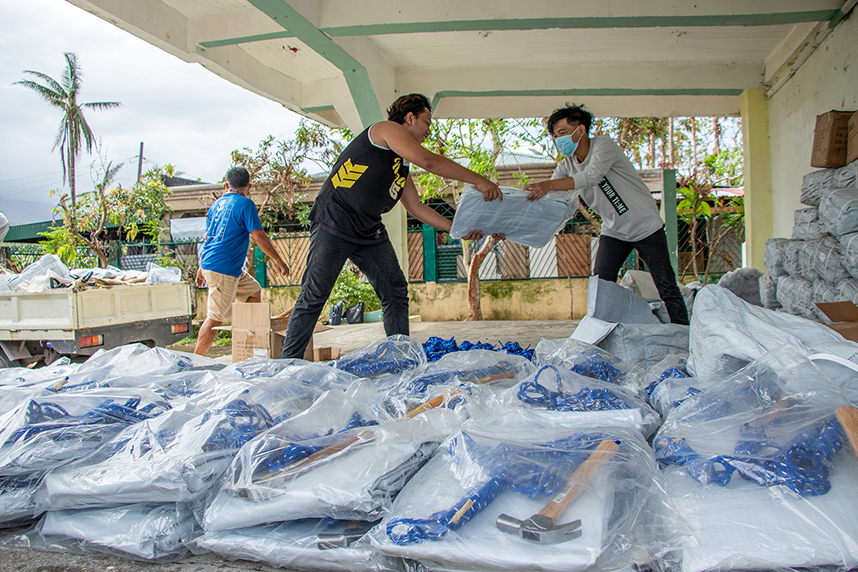
Ideal for:
- Entry to mid-level logistics staff in humanitarian organizations
- Operational-level managers seeking formal training
- Commercial-sector logisticians transitioning into the humanitarian field
By integrating digital learning and updated instructional design, CHL increases accessibility, affordability, scalability, and learner engagement.
This program would also be an ideal for those simply looking to understand the humanitarian logistics sector.
Program Structure
The CHL Certification Program consists of two components:
- Self-Guided Practice (via DisasterReady)
- Distance Learning Assignments (via Logistics Learning Alliance)
Learners may complete the Self-Guided Practice as a standalone course and receive a Certificate of Achievement.
To earn the full globally recognized CHL Certification from CILT (UK), both components must be completed.

1. Self-Guided Practice (FREE)
A flexible, online learning pathway introducing the fundamentals of humanitarian logistics through engaging modules and the SCILaid case study.
Key Features:
- Accessible through the DisasterReady training portal
- Includes interactive materials and online assessments
- Updated with revised content and improved learning design
- Earn a Certificate of Achievement upon completion
- Completion required as part of Full Certification
Duration: ~30 learning hours (approx. 6 weeks @ 5 hrs/week)
Fee: FREE
2. Full Qualification (CHL Certification)
The full qualification deepens learners’ understanding of global humanitarian logistics through coach-supported assignments that promote critical thinking and real-world application.
Learners benefit from:
- Personalized coaching and expert feedback
- Scenario-based assignments
- Practical application of logistics principles
- Earn Full CHL Certification upon Completion
Credential Awarded: Full CHL Certification from CILT (UK)
Duration: ~74 learning hours (approx. 5 months @ 5 hrs/week)
Fee: 860 GBP
Course Content Overview
The CHL Programme is structured into seven comprehensive units covering the complete humanitarian supply chain cycle.
Unit 1 – Humanitarian Supply Chain
Learn how the supply chain enables humanitarian organizations to meet operational goals. Topics include:
- Phases of humanitarian response
- Project cycle & emergency types
- Supply chain models and processes
- Risk management, preparedness, compliance & performance management
Unit 2 – Warehousing & Inventory
Develop the skills to set up and manage warehouse operations in diverse emergency environments. Topics include:
- Warehouse planning, layout & resource needs
- Equipment selection & workflow design
- Stock control, documentation & record-keeping
- Health & safety, security & risk management
Unit 3 – Procurement
Understand procurement as a core supply chain function in humanitarian operations. Topics include:
- Needs identification & key procurement stages
- Organizational procurement policies & compliance
- Supplier performance monitoring & development
- International contracting, commerce & payment methods
- Risk mitigation in supplier relationships
Unit 4 – Transport
Explore how to plan and manage the movement of goods in humanitarian contexts. Topics include:
- International and local transport modes
- Route planning, scheduling & movement control
- Working with third-party logistics providers
- Selecting appropriate transport options
- Managing outsourced transport services
Unit 5 – Fleet Management
Gain the knowledge to establish and run a humanitarian fleet. Topics include:
- Vehicle selection & equipment needs
- Fleet monitoring systems & procedures
- Driver management: recruitment, training & development
- Operational planning and risk mitigation
Unit 6 – Cash and Voucher Assistance (CVA)
Understand the supply chain’s role in supporting CVA programming. Topics include:
- Market assessments & modality decisions
- Delivery mechanisms & contracting complexities
- Procurement considerations for CVA
- Monitoring frameworks & operational design
Unit 7 – Managing a Humanitarian Supply Chain Response
Bring together all elements of the supply chain to support effective emergency response. Topics include:
- Preparedness, performance management & compliance
- Safety, security & operational decision-making
- Managing teams and coordinating with external agencies
- Adapting to changing conditions during humanitarian operations
Why Choose the CHL Certification?
- Recognized globally within the humanitarian logistics sector
- Flexible, affordable, and designed for busy professionals
- Blends foundational theory with practical, real-world scenarios
- Supported by expert coaches from the Logistics Learning Alliance
- Awards prestigious certification from CILT (UK)